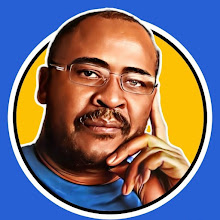
Brief Background Profile

My photo
Luveve, Bulawayo, Zimbabwe
Easy to socialise with, don't like too much repetition, very energetic, very passionate about my work and friends. Very open minded but opinionated. Principled and believe in honesty..saying it like it is..

Monday, 26 January 2015


Dear South African Citizen,

First of all I would like to thank you all for allowing us to visit and live in 'your country', though I am not a fan of the imaginary boundaries created by the Berlin Conference of 1884–85 over the last couple of years.

I am a Rhodesian born Zimbabwean, however my ancestors are descendants from the South linked to the BaSuthu and Ndebele klans. I still have traceable relatives who remained in South Africa and also acquired a new link through marriage that qualified me to be a South African citizen regardless of my place of birth. I share this information so that you realise how close we are as people only being distiguished by labels and imaginary boundaries.

I am very worried and disgusted by the emergence of inhuman activities associated with xenophobia being pepatrated by some sections of the South African Society alleged to be endorced by law enforcement officials that I have recently read in various media sources.

I do do appreciate the pressure that migration not only from Zimbabwe but the rest of Africa is placing on peace loving and culturally rich diverse population of South Africa, some who are also struggling to earn a basic living in order to live descent lives. I have no words to fully describe how grateful and appreciative Zimbabweans who are living and working in South Africa are as the socio-economic and political conditions in Zimbabwe have been unstable and unpredicatable for quite sometime now.

I am sure most South African's are well informed about the state of the economy in neighbouring countries, like you have neighbours that you live next to Zimbabwe and South Africa have been peaceful neighbours for a very long time because of the cultural and economic ties between the two countries and now is not the time to start burning those bridges of understanding, if anything we should strengthen our bonds towards finding solutions to problems faced by our communities. We have much more in common than the imaginary differences that some want to try and use to divide us.

I ask those committing these inhuman acts against other humans to think before they act and stop this senseless violation of human rights. We are all living on borrowed time and hence it's important that we have respect for each other, for ideas on how best we can overcome the problems we face won't come from confrontational acts but open dialogue and shared perspectives that will inspire us to be better persons than we were yesterday.

"umuntu ngumuntu ngabantu"..I am because we are and our differences should be learning opportunities to help us understand each other better.

Your loving distant relative

Muntu..

Wednesday, 7 January 2015

Possible factors of our flawed Economic Development approach.


I am of the 'opinion' colonialism brought with it functional class structures from the British Empire, though generally most of Africa had Monarchial structures. The difference with Africa's monarchs is that they had a strong social component to them guided by what we know as 'Ubuntu' or 'Hunhu' in Zezuru language of Zimbabwe. In 'ubuntu' which translates to a way of life, individuals and communities work together based on the understanding that we all need each other to survive in this world and build stronger united nations.

In 1980 Zimbabwe inherited capitalist structures that favoured a minority wealthy upper class (elitism). What happened after independence was a simple but gradual exchange of roles from a wealthy white upper class to a new super rich black elite class created by influential powerful politicians conspiring with some of powerful white owners that owned most of the countries means of production (notable 'Lonrho conglomerate') to consolidate economic power and control in the country.

These secret partnerships (neo-colonial arrangements) went on undetected and unknown by most members of society as they were still mesmerised and blinded by the prospect of majority rule. Their existence is probably what eventually fuelled the spread of corrupt practice in public institutions and government.

In reality what most expected would become a new independent Zimbabwe with fair opportunities for all was never to be as the inherited structures remained in place and were gradually used in a similar manner to create the current socio-econmic and political environment similar to the colonial era where racial differences determined ones climb up the social ladder, however in a ZANU PF government one's liberation credentials and ones loyalty to ZANU PF as a party became the new wealthy minority feeding ZANU's stay in power by any means necessary.

It is a well known fact across the world that most of those who do venture into financially beneficial activities in any economic environment tend to come from more affluent families or political elites in those countries. As I see it in Zimbabwe because we inherited a minority wealthy structured economy the majority tend to have little or no knowledge of thinking beyond earning a living, that's probably one of the main reasons we have had the mass migration of professionals to more developed countries who offer better salaried jobs.[economic migrants]

I would like to think that part of the causes to our situation is the mind-set that we are educated and taught to aspire for a professional qualification in order to be able to apply for a good paying job rather than use education as a medium to unleash our full potential by thinking innovatively and seeking ways of making a living.Perhaps what makes the existing system less relevant to changing times is the inability to channel resources to encourage economic development and research in that direction.

What Zimbabwe needs is an education system that is integrated with industry and finance so as to enable students not only learn and acquire new knowledge but are equally given opportunities through-out their studies to gain practical experience in their areas of interest and passion.

It's important that Government in partnership with private sector create a Fund that supports new Entrepreneurs in order to promote economic development initiatives that also have the support of volunteer mentors from the Corporate sector to help guide aspiring entrepreneurs during their starting phase. Tax credit incentives could be offered to volunteer business experts to encourage participation.

I believe the role of nation building should not be left to the sole discretion of government only, our private sector also needs to do more to support economic development initiatives at various levels of the social strata. I do appreciate that we can not all be equal nor fully reverse the imbalances of the past to agreeable levels, however we can work torwards creating a much fairer society where every citizens has an opportunity to unleash their full potential in life. We are all born in different times with different circumstances but those differences should not be used to divide us from pursuing our purpose in life.

Growth comes from learning, and there is just so much we can learn from each other and our enviroments, so in what ever we do and what ever we aspire to achieve let's always try and do more listening and analysis for that will help us understand and appreciate the challenges we face in this life.

I am because we are. Umuntu ngumuntu ngabantu. Tisu vanhu vacho!

Wednesday, 19 November 2014

Are we making the right choices in life


It's been a while since I visited my blog, in fact since I wrote anything i have found interesting in my journey of life. I think writting is a very therapatic experience and more than that it helps us record our own thoughts and share perspectives that may help look at certain experiences in life from a different angle.

I thought I should share and try to explore the subject of 'choice' in life. I think most of us know and appreciate that choices have consequences, it's a basic fact of life, which we sometimes take for granted and only realise when it's too late that we should have perhaps given that opportunity a bit more time to think before actually making the choice. However on other occassions following our 'intinct' does indeed sometimes result in satisfying outcomes.

I'm going to use Zimbabwe my country of birth as an example in this article. There seems to be a state of confusion in our socio-economic and political enviroment, on one end you have political leader's fighting for power, position and control. These conflict of interest are not unique to just one political camp but seem to have affected all including some new comer's who all seem to believe they are making the 'right choices' to solve the current never ending socio-economic and political crisis.

We also have the street activists who may be influenced by events in other countries and now believe the only way to fix the challenges they face is to take a stand at Africa Unity Square and hope that the people will see their stand as the 'right choice' and a positive step forward in forcing the current government to step down after 34 years of leadership that blames everyone but themselves for the failure of socio-economic and political progression. We also have various diaspora based groups who also believe that protest action in countries that Zimbabwe trades with is the right choice if they are to apply pressure to force government to change some of it's retrogressive policies and improve service delivery.

Most of what's happening now has been tried and tested, power struggles have existed and been crashed on many occassions, unless these repeat strategies have a new angle to them I personally am failing to see how they would turn the table's without facing the same obstacles that many before them have tried to deal without success. I am by no means discouraging those individual or group efforts from pursuing their objectives but am simple suggesting that they should think about the consequences that will follow their actions. It is very important to stop and think before one pursues a public act demanding constitutional  rights.

It seems to me people are not thinking but reacting to changing circumstances. There is also a 'silent section' of our society who act as if everything is ok, one wonders why some people do not seem to care about the decisions being made on their behalf. There seems to be complete lack of emotion or motivation towards any united effort to resolve the current stand offs and incompetences and corruption in public institutions. Perhaps there are some who think they are perfect and they cannot go wrong, no matter which way they choose. Such attitudes will not help us address our complex issues, it does not matter who you are, you should equally think about your choices before acting, silence can be easily misintepreted as agreeing with injustice. I know this is very short, simple and generalised article, however it may be just worth the thought during this period where some of us have our priorities in total disarray.

The choice you make today may change your life for ever, so think before you act.

Our actions are our choices!

"Thank you for visiting my blog...this is just my personal perspective not an academic paper so feel free to share your comments..I may just appreciate your own perspective of how you see choices."

Sunday, 14 September 2014

How does the average African understand the meaning of 'Human Development'?


'Human development is defined as the process of enlarging people’s freedoms and opportunities and improving their well-being. Human development is about the real freedom ordinary people have to decide who to be, what to do, and how to live.'

Historically, development was mostly perceived in terms of economic performance. We have too long been preoccupied with material production and there has been a search for a good measure of it. Surely, per capita income has been proved to be a good candidate and has dominated the scene ever since. One can ask - why per capita income? First it is an attractive single indicator for assessing economic performance. Second, it is also useful to for dividing the world into groups as in rich and poor, developed and developing, which may be a good criteria for allocating official development assistance at international level. We have seen how good reliable and solid data on national income accounts were available to calculate per capita income at a point of time and over time.

Nowadays, development is not about economic performance alone, but most importantly about people and their well-being. I guess some will ask why should we shift from economic performance to people and what is the rationale? The reality is because people are the ultimate objective of development. Economic growth is not an end by itself, it is a means to enhancing people’s lives. The benefits of growth must be translated into lives of people.

Contrary to the above, in Zimbabwe some seem not to fully grasp the concept of human development, certain section of our society associate it with economic empowerment [making money], academic excellence [having high level academic qualification]..but does having more money or high academic qualifications automatically translate to human development or are they just some of the components that can help human growth and development?

Today we have some sections of our society advocating for monarchs and within that monarch system a totem structured hierarchy that discriminates other tribes/totem names based on some concorted historical relevance. How can a monarch system recognise individual excellence and achievement if it's only limited to a particular family line based on some ancient selection criteria? Wait a minute I thought according to some historical accounts there were wars that disposed some of these monarch systems in the past where they would be replaced by the victor, so then why should any so called royal selection process be limited to a specific totem name and not consider individual qualities? Sadly we still have some sections of our population who seem to be treating politicians like monarchs and demi-gods and also advocating for some kind of a similar dynastical system.

Please don't get me wrong, I have no problems with individuals aspiring for political office with historically links with individuals who were prominent figures in society, however these aspiring candidates/leaders need to first demonstrate they have what it takes to be considered for those leadership roles based on a very authentic, transparent nomination and election process that also highlights their career track record and positive contributions in terms of their work with communities.

Why should we leap backwards when the rest of the word is leaping forwards? Our media is now more about personalities than productive and progressive socio-econmic and political issues capable of developing our societies, those who aspire for leadership seem more interested in positions and power rather than servitude and justice.
I believe that anyone committed to social justice and equal rights must concern themselves with the importance of encouraging equal opportunity as a way of helping to ensure that all individuals in our society have an equal opportunity to succeed. Some of our current crop of leaders have constantly failed to acknowledge that their socio-economic and political empowerment policies have so far been based on a partisan basis in addition to racial prejudice and discrimination of minorities based on spoken language,

For the past thirty four years, using race along with other highlighted factors has marginalised the educational experience on our nation’s Educational Insititutions and lessened equal opportunity for people from minority backgrounds in many aspect affecting human development.
If we are to innovate and develop human ability, knowledge and skill beyond current levels we should not forget the fact that first and foremost we are all 'Human Beings' before placing all other lables on ourselves.